
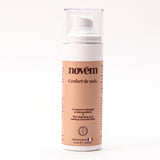
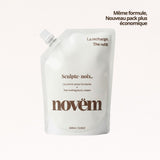
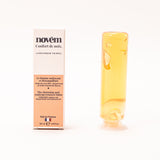

Alpha-linolenic acid and the skin barrier form one of the most important duos in modern cosmetology — and yet, it is still little known to the general public. The skin barrier is not a metaphor: it is a real, precise lipid structure, the integrity of which dictates the health of the entire skin. When it is weakened, the entire skin suffers: dryness, redness, inflammation, and increased sensitivity to irritants. And among the best-documented natural active ingredients for strengthening it, essential fatty acids — omega-3 and omega-6 — come out on top. To understand their role is to understand why PDO Grenoble walnut oil is at the heart of the Novëm range. This guide explains everything to you.
1. The skin barrier: anatomy of an invisible shield
The "brick and mortar" structure
The epidermis is often described using the "brick and mortar" model: keratinocytes (skin cells) are the bricks, and intercellular lipids make up the mortar. This lipid mortar is composed of approximately 50% ceramides, 25% cholesterol, and 15% free fatty acids (including linoleic acid and alpha-linolenic acid). This structure forms a physical and chemical barrier that performs two critical functions: preventing water loss (TEWL — Transepidermal Water Loss) and blocking the entry of pathogens, irritants, and allergens. When this mortar is degraded, both functions collapse simultaneously.
The role of ceramides and free fatty acids
Ceramides are the most abundant lipids in the barrier. They bind with free fatty acids to form highly organized lipid lamellae — impermeable sheets that constitute the skin’s true seal. Linoleic acid (omega-6) is directly involved in the synthesis of type 1 ceramides and is essential to their structural organization. A deficiency in linoleic acid directly translates to a more permeable barrier, and skin that is drier and more reactive. Alpha-linolenic acid (omega-3) plays a role in the fluidity of cell membranes and in inflammatory modulation.
2. When the barrier weakens: causes and consequences
Factors that degrade the barrier
The skin barrier can weaken under the effect of many factors, which are often cumulative:
-
Genetic factors: mutations of the FLG (filaggrin) gene — present in 10% of the population — reduce the production of this protein, which is essential for keratinocyte cohesion.
-
Harsh cleansers: surfactants like SLS or SLES extract lipids from the barrier with every wash.
-
Over-exfoliation: low-pH AHAs/BHAs and harsh physical exfoliants abrade the stratum corneum.
-
Environment: cold, wind, and dry air (air conditioning, heating) increase TEWL and weaken the barrier.
-
Chronic stress: via the neuroendocrine axis, it reduces ceramide synthesis and disrupts the skin's immune response.
-
Diet poor in essential fatty acids: a diet deficient in omega-3 and omega-6 directly impacts the lipid composition of the barrier.
The consequences of a weakened barrier
When the barrier is compromised, three problems appear simultaneously. First, increased TEWL: the skin loses excess water and becomes dry, tight, and uncomfortable. Next, increased penetration of irritants and allergens: cosmetic ingredients, pollution, and microbes penetrate more easily, triggering inflammatory responses. Finally, dysbiosis of the skin microbiome: a weakened barrier alters the skin pH and promotes the proliferation of pro-inflammatory microorganisms such as Staphylococcus aureus (involved in atopic dermatitis). It is this context of a weakened barrier that is at the root of most redness and sensitivity — we explain this in our article on
anti-redness skincare for sensitive skin.
3. Alpha-linolenic acid (omega-3): the barrier-repairing active ingredient
The topical mechanism of action of ALA
Alpha-linolenic acid (ALA) is an 18-carbon essential omega-3 fatty acid. When applied topically, it penetrates the epidermis and is incorporated into the membrane phospholipids of keratinocytes. It improves membrane fluidity, which facilitates cellular exchange and strengthens the cohesion of epidermal layers. Through the delta-6-desaturase enzymatic pathway, ALA is partially converted into long-chain fatty acids (plant-based EPA, DHA) that serve as precursors to pro-resolving mediators of inflammation (resolvins, protectins). These molecules actively "switch off" inflammation once it has fulfilled its protective function.
ALA and TEWL: scientific evidence
Several clinical studies have evaluated the effect of topical applications of oils rich in ALA on TEWL and skin hydration. The results are consistent: oils rich in ALA significantly reduce TEWL and improve skin hydration in skin with a compromised barrier (atopic skin, severely xerotic skin). A study published in the British Journal of Dermatology showed that a topical application of linseed oil (rich in ALA) for 4 weeks improved the barrier function of atopic skin by 25%. Walnut oil, with an ALA content comparable to that of linseed oil but with an additional polyphenolic profile, offers a double benefit.
4. Linoleic acid (omega-6): the other pillar of the barrier
Its role in ceramide synthesis
Linoleic acid (LA) is an essential omega-6 fatty acid indispensable for the synthesis of EOS (or type 1) ceramides — the "long-chain" ceramides that make up the outermost and most impermeable layer of the barrier. A deficit of linoleic acid in the epidermis produces "short" ceramides that organize less well into lipid lamellae. The barrier then becomes porous and TEWL increases. Topical application of oils rich in linoleic acid — like walnut oil, which contains up to 57% — compensates for this deficit and restores lipid organization.
Omega-3/omega-6 ratio: finding balance
In topical cosmetics, the omega-3/omega-6 ratio of a vegetable oil is not anecdotal. An excess of omega-6 (without omega-3 to counterbalance it) can promote the synthesis of pro-inflammatory mediators — the opposite of what we are looking for. The ideal is a ratio close to 1:4 (ALA:LA). Grenoble walnut oil has a ratio of approximately 1:4.3 — among the most balanced of cosmetic vegetable oils. This is significantly better than sunflower oil (1:120 ratio) or argan oil (almost no ALA).
5. Strengthening your skin barrier: natural active ingredients to prioritize
Recommended vegetable oils for the barrier
Not all vegetable oils are created equal when it comes to the skin barrier. The best ones for strengthening the barrier are those rich in linoleic acid and/or alpha-linolenic acid: walnut oil (ALA + LA + polyphenols), hemp oil (very balanced ALA/LA ratio), camelina oil (rich in ALA), rosehip oil (rich in LA and ALA). Avoid in case of a weakened barrier: oils very rich in oleic acid (olive, avocado) which can destabilize the skin’s lipid ratio.
Topical ceramides for an immediate effect
In addition to oils rich in lipid precursors, formulas containing plant-based ceramides allow for the direct delivery of missing lipids to the barrier. They are particularly useful for very weakened skin where ceramide biosynthesis is heavily reduced. Topical ceramides integrate into the lipid lamellae of the stratum corneum and quickly "seal" breaks in the barrier.
The importance of pH and cleansing
The skin barrier functions at a slightly acidic pH (4.5 to 5.5). The use of alkaline cleansers (classic superfatted soaps, pH 8-9) disrupts this acidic pH and compromises the enzymes (serine proteases, β-glucocerebrosidase) responsible for the formation of ceramides. Choosing a cleanser with a physiological pH (between 4.5 and 5.5) is just as important for the barrier as the choice of moisturizer. The Novëm Cleansing Balm with walnut oil cleanses without soap and without disrupting the skin's pH.
6. PDO Grenoble walnut oil: the ideal barrier care
An exceptional lipid composition
Organic PDO Grenoble walnut oil presents a convergence of properties that is extremely rare in cosmetics: 57% linoleic acid (omega-6), 13% alpha-linolenic acid (omega-3), anti-inflammatory phytosterols, antioxidant polyphenols, and protective vitamin E. This composition allows it to act simultaneously on the reconstruction of the lipid barrier (via the supply of ceramide precursors), on inflammatory modulation (via ALA and phytosterols), and on protection against oxidative stress (via polyphenols and vitamin E).
From the Michallet Farm to your skin barrier
Novëm sources directly from the Michallet Farm, which has been operating PDO walnut orchards in Isère for generations. The oil is extracted by first cold pressing to preserve the entirety of its fatty acids and micronutrients. This ultra-short supply chain guarantees freshness and lipid quality that conventional sourcing cannot match. It is this rigor in the supply chain that makes the difference — for your skin, fresh, non-oxidized fatty acids are significantly more effective than oils stored for a long time. To understand the global philosophy behind this approach, consult our
complete guide to anti-inflammatory cosmetics.
FAQ — Your questions about the skin barrier and omega-3s
Can you take omega-3s as a dietary supplement for your skin?
Yes, and it is complementary to topical application. Dietary omega-3s (linseed oil, chia seeds, walnuts, algae) enter the bloodstream and contribute to the lipid composition of the skin from the inside. Topical application and dietary supplementation act through different but synergistic pathways. For skin with a very weakened barrier (eczema, atopic dermatitis), the dual approach — topical + dietary — is recommended.
How long does it take to rebuild a weakened barrier?
The stratum corneum (the horny layer, the seat of the barrier) renews itself every 14 to 28 days. With an adapted routine (gentle cleanser, oil rich in ALA and LA morning and night, sun protection), the first improvements in barrier function are measurable after 2 weeks. A complete reconstruction can take 4 to 8 weeks depending on the initial degree of weakening. During this period, minimize stress: no exfoliation, no harsh acids, no sudden changes in routine.
Can walnut oil clog pores?
No. Grenoble walnut oil has a comedogenicity rating of 1 to 2 out of 5 — very low. Its richness in polyunsaturated fatty acids gives it a dry, penetrating texture that does not leave an occlusive greasy film. It is suitable for combination skin and even for oily skin with an inflammatory tendency, provided it is used in the appropriate quantity (3 to 5 drops are enough for the face).
Conclusion
The skin barrier is the foundation of all healthy skin — and essential fatty acids, omega-3 and omega-6, are its most critical building materials. To understand this mechanism is to understand why a well-chosen vegetable oil can transform reactive, dry skin into skin that is comfortable and resilient. Organic PDO Grenoble walnut oil, with its unique lipid profile and synergistic anti-inflammatory active ingredients, is one of the rare natural ingredients capable of acting on both barrier reconstruction and inflammation modulation — two sides of the same coin for sensitive and reactive skin.
→ Discover the Novëm Milky Serum and Soothing Face Oil → novemlab.co

