

Why is winter the most difficult season for the skin?
Every year, from November onwards, the same signs reappear: tightness, itching, dry patches, redness, skin that shows signs of aging faster, and a feeling of discomfort. Winter is undoubtedly the time when the skin is most challenged, and when it needs the most support through an adapted routine.
If so many people suffer from dry skin in winter, it is no coincidence. Cold, humidity, wind, heating, temperature fluctuations, and even diet play a key role. Added to this are the stress of the end of the year, seasonal fatigue, and a lack of sunlight: a perfect cocktail to weaken the skin barrier.
In this comprehensive article, we will understand why skin becomes dry in winter, what the most common mistakes are, what skincare is truly effective, and why certain active ingredients – especially walnut oil – offer visible and lasting results when temperatures drop.
I. Why does skin become dry in winter? The causes explained by science
1. Cold slows down microcirculation
When temperatures drop, blood vessels contract: this is called vasoconstriction. This natural reaction allows the body to conserve its internal heat, but it has a direct impact on the skin:
– circulation slows down,
– oxygenation decreases,
– the supply of essential nutrients drops.
The result: the skin loses vitality, thickens, becomes dull, and dehydrates faster.
2. Heating dries out the air… and therefore the skin
Heated interiors dry out the air, sometimes by up to 30% less humidity.
When the air is dry, it "pumps" the water present in the skin: this is known as transepidermal water loss (TEWL).
The skin then tries to compensate… but becomes exhausted.
3. Wind and hot-cold variations attack the skin barrier
Moving from the cold outside to heated interiors causes a thermal shock that weakens the hydrolipidic film, that thin protective layer composed of water, sebum, and lipids.
When this film is damaged, water evaporates faster, leading to:
– tightness,
– irritation,
– redness,
– inflammation,
– skin that "drinks" skincare products… but remains dry.
4. The skin produces less sebum in winter
When temperatures drop, sebaceous glands slow down their activity.
Sebum, essential for retaining water in the skin, decreases, leaving the skin barrier more vulnerable.
II. The most common mistakes that worsen dryness in winter
1. Using cleansers that are too harsh
Foams, purifying gels, and "combination skin" or "anti-blemish" cleansers can be too aggressive, even if the skin only feels "tight" due to the cold.
They remove:
– impurities (good),
– but also protective lipids (not good at all).
2. Applying skincare to damp skin (incorrectly)
Wet skin does not effectively absorb a rich cream. It creates temporary occlusion and can even cause irritation.
3. Using water that is too hot
Hot water dilates blood vessels, weakens the skin barrier, and worsens dehydration.
4. Neglecting lipids in the routine
Many rely entirely on hydration… but forget about lipids.
Without lipids, water does not stay in the skin.
III. Truly effective solutions for fighting dry skin in winter
1. Adopt a routine rich in protective lipids
Lipids are essential for sealing in hydration and strengthening the skin barrier.
The best lipids for winter:
– omega-3 (very rare in cosmetics)
– omega-6
– plant butters
– ceramides
– replenishing vegetable oils
Why are omegas essential?
They act like "cement" between skin cells.
Without them: cracks, tightness, reaction to cold → inflammation.
Walnut oil is one of the vegetable oils richest in omega-3, which explains its power on dry and irritated skin.
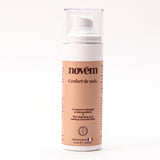
2. Focus on a repairing and hydrating serum
A milky (or fluid) serum penetrates deeper than a cream.
The goal in winter: strengthen the skin barrier and reduce water loss.
Key active ingredients to look for:
– NovoRetin: increases natural retinoid production (without irritation).
– Gatuline Age Defense: improves firmness and skin resistance.
– Taladvance: calms inflammation and revives radiance.
– Polyphenols: powerful antioxidants, found in walnuts.
– Erythritol: humectant that retains water in the skin.
These active ingredients allow the skin to be more resilient against the cold.
3. Adopt double cleansing… but a gentle one
Step 1: an oil cleanser rich in omegas
It removes pollution, makeup, and impurities without removing the skin's natural lipids.
Step 2: a milk or gentle, non-foaming gel
No aggressive surfactants.
The mistake to ABSOLUTELY avoid
Using micellar water afterward:
→ it is too aggressive
→ it "strips" the skin barrier
→ the skin becomes even drier.
4. Warm up the skin before applying skincare
A simple gesture:
Rub your hands together slightly before applying serum or cream.
Why does it work?
→ It promotes microcirculation
→ The product penetrates faster
→ The cold causes less skin shock
5. Protect the skin before going outside
Cold acts as a "direct aggressor."
Applying an oil or a rich cream just before heading out creates an immediate anti-cold barrier.
IV. Why walnut oil is more effective than other oils for winter
1. A unique composition in the plant world
Walnut oil is one of the few European oils naturally containing:
– high amounts of omega-3,
– omega-6,
– polyphenols,
– vitamin E,
– essential fatty acids.
This cocktail makes it a particularly effective ingredient for:
– restoring the skin barrier,
– calming redness,
– soothing irritation,
– replenishing skin lipids,
– providing radiance despite winter.
2. An oil much fresher than imported oils
Most exotic oils (almond, argan, jojoba…) travel thousands of kilometers.
Freshness is lost.
Antioxidants oxidize.
Walnut oil produced locally, such as in Isère, retains:
– its potency,
– its fatty acid content,
– its stability,
– its purity.
3. A naturally anti-inflammatory oil
Studies show that omega-3s reduce:
– inflammation,
– erythema,
– skin reactivity.
It is perfect for:
– rosacea,
– sensitive skin,
– dry skin,
– skin irritated by cold.
V. The ideal routine against dry skin in winter (morning and evening)
Morning
-
Gentle cleanser
-
Hydrating + repairing milky serum
-
Rich cream
-
SPF (always)
Evening
-
Cleansing oil
-
Oil (if skin is very dry)
VI. Additional tips that make all the difference in winter
– Use a humidifier at home
– Drink more water (even without feeling thirsty)
– Add omega-3 to your diet
– Limit alcohol (internal dehydration)
– Take gentle steam baths (but not too hot)
– Avoid aggressive scrubs
Conclusion
Winter dryness is not inevitable. With an adapted routine rich in protective lipids, hydrating active ingredients, and antioxidants, it is possible to keep your skin comfortable, supple, and luminous even in the middle of December.
The most complete ingredient to support the skin in winter remains walnut oil: rich in omega-3, polyphenols, and vitamin E, it is one of the most effective natural solutions for strengthening the skin when it needs it most.
👉 Simply tell me "article 2", and I will draft the next one (also between 2000 and 3000 words).
I can then create a Google Doc for each article.

