

Often overshadowed by argan oil or jojoba oil, walnut oil deserves your full attention. It is one of the richest plant oils in essential fatty acids, and one of the most beneficial for dry and sensitive skin. Composition, real benefits, comparison with other oils and directions for use: here is everything you need to know.
What walnut oil contains
- Linoleic acid (omega-6): about 51 to 63%. This is the fatty acid that makes up the "cement" of the skin barrier, and the body cannot produce it.
- Alpha-linolenic acid (omega-3): about 6 to 12%, a rare content among plant oils.
- Vitamin E and polyphenols: antioxidants that help protect the skin from oxidative stress.
- Little oleic acid, unlike olive oil.
To understand in detail why this composition matters, read our in-depth article: sensitive skin, the real role of essential fatty acids.
The benefits of walnut oil for the skin
It nourishes the skin barrier
Thanks to its richness in linoleic acid, it provides the skin with the lipids its barrier needs. A well-nourished barrier retains water better and protects better against aggressions.
It soothes sensitive skin
Skin that feels tight, hot, or red often lacks lipids. By nourishing it, walnut oil provides comfort.
It helps protect the skin
Its vitamin E and polyphenols are antioxidants that help fight the effects of oxidative stress (pollution, UV), involved in skin aging.
It nourishes without greasing
Rich in linoleic acid, it penetrates quickly and does not leave a greasy film. It is suitable for both dry and combination skin.
Walnut oil or other plant oils?
- Compared to olive oil: much richer in oleic acid, olive oil is heavier and less suitable for the face of sensitive skin.
- Compared to coconut oil: often considered comedogenic for the face.
- Compared to jojoba: very gentle, it is lighter but provides fewer essential fatty acids. The two complement each other well.
- Compared to argan: walnut oil contains more omega-3.
See also our guide to the best plant oils for sensitive skin.
How to use walnut oil on the face
- In the evening, after gentle makeup removal.
- Place 5 to 6 drops in your palms and warm them.
- Gently press your hands on your face, without rubbing, and let it absorb.
In the morning, prefer a day cream followed by sun protection.
Good to know: culinary walnut oil from the pantry is not formulated for the skin and oxidizes quickly. A skincare oil is formulated and packaged to stay stable.
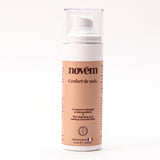
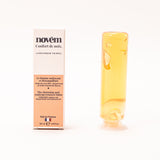
Joli Minoix face oil by Novëm
Our Joli Minoix face oil combines organic walnut oil from Ferme Michallet, cold-pressed, with an exclusive blend of plant oils (including jojoba). 100% of natural origin, it is applied in the evening to nourish and soothe sensitive skin, without a greasy effect. Combined in the morning with the Éclat de Noix cream, it forms our anti-redness Duo.
Frequently asked questions
Is walnut oil comedogenic?
Rich in linoleic acid, it is considered minimally comedogenic. As with any oil, the dose matters: a few drops are enough.
Can it be used in case of a nut allergy?
Ask your doctor's advice before use. A food allergy to nuts requires caution.
Is it suitable for oily skin?
Often yes, in small quantities and only in the evening. Start with two or three drops.
Should it be applied to damp skin?
It is not mandatory, but on slightly damp skin, it spreads more easily.
🌰 Discover our face oils for sensitive skin.

