

Anti-inflammatory cosmetics are one of the most promising approaches to natural beauty. Yet, behind this catch-all term lie very different realities: acute inflammation, low-grade chronic inflammation, skin sensitivity, vascular hyper-reactivity... Understanding these mechanisms is the first step toward choosing a truly effective skincare product — and avoiding formulas that "soothe" the appearance without treating the cause. In this comprehensive guide, we explore what skin inflammation is, which natural active ingredients actually act upon it, and how to build a coherent anti-inflammatory skincare routine. We also explain how Novëm's Nucithérapie®, based on the active ingredients of AOP Grenoble walnuts, addresses these issues with a scientific and local approach.
1. Skin inflammation: understanding before acting
What is skin inflammation?
Inflammation is the body’s natural immune response to an aggression: bacteria, UV rays, friction, allergens, oxidative stress. In the skin, it manifests through the activation of resident immune cells (mast cells, macrophages, dendritic cells) that release pro-inflammatory mediators: histamine, cytokines (IL-1β, IL-6, TNF-α), prostaglandins E2, and leukotrienes. These molecules cause vasodilation (redness), edema (swelling), heat, and sometimes pain. In itself, this response is beneficial and transient. The problem arises when it becomes chronic and low-grade — silent, continuous, invisible but destructive.
Acute vs. low-grade chronic inflammation
Acute inflammation is visible: pimples, bites, sunburn. It resolves in a few days. Low-grade chronic inflammation, however, is almost invisible on a daily basis — but it accelerates skin aging, weakens the lipid barrier, disrupts the microbiome, and maintains sensitivity. It is fueled by exogenous factors (pollution, UV, irritating ingredients in cosmetics, stress) and endogenous factors (gut microbiota imbalance, pro-inflammatory diet, chronic stress). Many "sensitive" or "reactive" skin types are actually in a state of permanent low-grade chronic inflammation.
2. The causes of skin inflammation: what you need to know
External aggressions
UV rays are the primary cause of chronic skin inflammation: solar radiation directly activates the production of pro-inflammatory cytokines and generates free radicals. Pollution (fine particles, ozone, heavy metals) penetrates the epidermis and triggers inflammatory cascades. Cosmetics themselves can be pro-inflammatory: denatured alcohols, synthetic fragrances, irritating preservatives (certain parabens, MIT/CMIT), and harsh surfactants (SLS, SLES). An ill-suited cosmetic routine can maintain the inflammation it is supposed to soothe.
Intrinsic factors
Many skin types have a genetic predisposition to sensitivity — notably via mutations of the filaggrin gene, a protein essential for the integrity of the skin barrier. Medical conditions like rosacea, atopic dermatitis, or psoriasis involve specific inflammatory mechanisms. Psychological stress increases the production of cortisol, which inhibits certain local immune functions and disrupts ceramide synthesis. Finally, a deficiency in essential fatty acids — particularly alpha-linolenic acid (omega-3) — is directly associated with a weakened barrier and increased skin reactivity. This is precisely the mechanism addressed in our article on the
skin barrier and omega-3s: understanding the role of essential fatty acids.
3. The most effective natural anti-inflammatory active ingredients
Alpha-linolenic acid (omega-3): the lipid modulator
Alpha-linolenic acid (ALA) is a plant-based essential omega-3 fatty acid. Applied topically, it modulates the synthesis of pro-inflammatory prostaglandins E2 and promotes the production of pro-resolving mediators (resolvins, protectins). Dermatological studies have shown its effectiveness in reducing erythema (redness), improving hydration, and strengthening the barrier in atopic skin. Organic Grenoble walnut oil has one of the highest ALA contents among cosmetic plant oils — up to 13%, compared to less than 1% for argan oil.
Polyphenols: antioxidant and anti-inflammatory protection
Plant polyphenols (flavonoids, ellagic acid, tannins, and juglone in the case of the walnut) act on several targets of inflammation: they inhibit NF-κB (the central transcription factor for inflammation), reduce the production of ROS (reactive oxygen species), and modulate pro-inflammatory cytokines. The Grenoble walnut is one of the richest plant sources of polyphenols among cosmetic oils — making it an exceptional natural anti-inflammatory active ingredient.
Phytosterols: soothing without occluding
Phytosterols (β-sitosterol, campesterol, stigmasterol) present in plant oils have documented anti-inflammatory action: they inhibit cytokines IL-1β and TNF-α and reduce skin vascular permeability. Their light, non-comedogenic texture makes them particularly suitable for sensitive and reactive skin that does not tolerate overly rich formulas.
Vitamin E: the protective antioxidant
Vitamin E (tocopherol) is naturally present in several plant oils, including walnut oil. It acts on the front line against oxidative stress induced by UV rays — the main source of photo-induced inflammation. In synergy with polyphenols, it forms a complete antioxidant system that prevents collagen degradation and slows down inflammatory aging.
Panthenol and complementary soothing active ingredients
Beyond the active ingredients of the walnut, certain natural ingredients effectively complement an anti-inflammatory formula: panthenol (provitamin B5) stimulates epidermal regeneration and soothes; allantoin (comfrey extract) reduces irritation; bisabolol (chamomile extract) inhibits the production of pro-inflammatory cytokines; centella asiatica extract stimulates collagen synthesis and accelerates the healing of micro-inflammations.
4. What a true anti-inflammatory formula must avoid
Common pro-inflammatory ingredients
Paradoxically, many "soothing" skincare products contain irritating ingredients. Synthetic fragrances and high-dose essential oils are among the primary contact allergens and can trigger inflammatory reactions even in low concentrations. Denatured alcohols (alcohol denat.) alter the lipid barrier and increase TEWL (transepidermal water loss). Preservatives like MIT/CMIT or phenoxyethanol in high doses are documented skin irritants. For sensitive skin, even certain exfoliating acids (AHAs at low pH) can aggravate existing inflammation.
The INCI list under the microscope
A well-designed anti-inflammatory formula must have a short INCI list, dominated by lipid active ingredients (plant oils rich in ALA and linoleic acid), natural antioxidants, and identifiable soothing active ingredients. Avoid lists of 25+ ingredients with complex, cascading names: formulation complexity often masks a low concentration of actual active ingredients. The simpler and more transparent the formula, the more likely it is to be gentle and effective.
5. Novëm's Nucithérapie®: an integrated anti-inflammatory approach
AOP Grenoble walnut oil at the heart of the formulation
Novëm has built its entire range around Nucithérapie® — the scientific exploitation of the anti-inflammatory active ingredients of the AOP Grenoble walnut. The organic walnut oil from the Michallet Farm in Isère naturally concentrates the four key anti-inflammatory active ingredients: alpha-linolenic acid, polyphenols, phytosterols, and vitamin E. It is one of the rare natural active ingredients that acts simultaneously on the prostaglandin pathway, on oxidative stress, and on the integrity of the skin barrier.
Novëm products for inflammatory skin
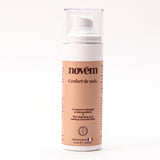
The Soothing Face Oil concentrates the walnut's anti-inflammatory active ingredients in their most direct form. The Day Cream, a winner at the Victoires de la Beauté, combines walnut oil with moisturizing active ingredients for a universal texture adapted to reactive skin. The Milky Serum incorporates NovoRetin™ (plant-based retinol) which, in synergy with walnut oil, works on skin remodeling without irritation. The Anti-Redness Routine and the Sensitive Skin Essentials Routine were specifically designed for inflammatory profiles — discover our article dedicated to
skincare and routines for redness-prone skin: soothing redness and sensitive skin naturally.
6. Building an anti-inflammatory cosmetic routine
The fundamental principles
An effective anti-inflammatory routine relies on three pillars: protection (against UV and pollution), repair (of the lipid skin barrier), and modulation (of inflammatory mechanisms). It must be minimalist — every additional product is a risk of intolerance or interaction. It must be consistent — no mixing of harsh exfoliating active ingredients with soothing treatments. And it must be stable over time — chronic inflammation subsides gradually, not overnight.
Example of a morning/evening routine for inflammatory skin
Morning — Gentle non-foaming cleansing (or alcohol-free micellar water) → anti-inflammatory serum or oil (rich in ALA) → light moisturizer with soothing active ingredients → mineral sun protection (zinc oxide, non-irritating). Evening — Gentle oil-based makeup removal (the Novëm Cleansing Balm is ideal) → repairing night serum or oil (Soothing Face Oil or Milky Serum) → occlusive cream or balm if the skin is very dry. A routine of 3 to 4 products maximum is much more effective and better tolerated than an 8-step routine.
FAQ — Your questions about anti-inflammatory cosmetics
Anti-inflammatory cosmetics and medication: what's the difference?
Anti-inflammatory cosmetics act preventively and supportively: they modulate inflammation, strengthen the barrier, and reduce oxidative stress. They do not replace prescribed medication for a diagnosed inflammatory condition (severe rosacea, atopic dermatitis, psoriasis). If you are in doubt about the origin of your inflammation, consult a dermatologist. Natural cosmetics can be an excellent complement to medical treatment.
How long before seeing results?
Low-grade chronic inflammation does not resolve in a few days. Expect 4 to 8 weeks of a consistent routine before evaluating results. The first visible improvements (reduction of redness, decrease in reactivity) usually appear between 3 and 6 weeks. The skin barrier rebuilds in 28 days — the time of a complete cell renewal cycle.
Can plant oils worsen inflammation?
Some plant oils rich in oleic acid (avocado, olive) can clog pores in acne-prone skin. Others very rich in omega-9 can unbalance the skin's omega-3/omega-6 ratio if used in excess. The oils recommended for inflammatory skin are those rich in linoleic acid and alpha-linolenic acid — such as Grenoble walnut oil, camelina, or hemp.
Conclusion
Effective anti-inflammatory cosmetics are not a list of "trendy" ingredients — they are a rigorous approach that understands the mechanisms of inflammation, identifies the active ingredients that truly act on those mechanisms, and formulates simple, stable, and coherent skincare. AOP Grenoble walnut oil, with its unique profile of omega-3s, polyphenols, and phytosterols, is one of the most complete natural anti-inflammatory active ingredients available in cosmetics. This is what Novëm has chosen to place at the heart of its entire range — with the care and rigor that sensitive and inflammatory skin deserves.
To go further: Anti-redness care for sensitive skin · Skin barrier and omega-3s: the role of fatty acids
→ Discover the Novëm Anti-Redness Routine → novemlab.co

