

Walnut oil for the skin is no ordinary ingredient. Extracted from the fruit of the walnut tree (Juglans regia), this precious plant oil concentrates essential fatty acids, powerful antioxidants, and vitamins that truly transform the skin from within. In Grenoble, the walnut even benefits from a Protected Designation of Origin (PDO), a guarantee of impeccable quality and traceability.
At Novëm, a natural cosmetics brand founded by Maegan Rocca, this exceptional oil is at the heart of every formulation. Whether you are looking to hydrate dry skin, reduce the first signs of aging, or simply take care of yourself with 100% natural ingredients, walnut oil might just become your best beauty ally. Let’s discover its secrets together and why it deserves a prime spot in your daily routine.
1. A unique composition, rich in precious active ingredients
Essential fatty acids: the power of omega-3s
Walnut oil is distinguished by its exceptional content of alpha-linolenic acid (ALA), an omega-3 that your body cannot synthesize on its own. This essential fatty acid makes up about 10 to 15% of the oil’s composition and plays a fundamental role in maintaining the skin barrier. At the same time, its linoleic acid (omega-6) complements this lipid profile for a nourishing and restorative effect.
These "good" fats penetrate quickly into the superficial layers of the epidermis, mimicking the skin’s natural lipids to nourish it without weighing it down. For dry or dehydrated skin, it is a simple truth: give your skin what it naturally needs to repair itself.
Antioxidants and phytosterols: a natural anti-aging shield
The polyphenols contained in walnut oil act as powerful antioxidants, neutralizing the free radicals responsible for premature skin aging. Vitamin E, naturally fat-soluble, strengthens this protection while promoting cellular regeneration. Finally, phytosterols—plant molecules similar to cholesterol—soothe inflammation and strengthen the skin's structure. A cocktail of natural active ingredients that few plant oils can match.
2. The concrete benefits of walnut oil for the face
Deep hydration and reinforced barrier effect
One of the first visible effects of cosmetic walnut oil on the skin is hydration. By slipping between the cells of the epidermis, it creates a light protective film that limits transepidermal water loss (TEWL). Your skin stays supple, comfortable, and radiant throughout the day. Particularly recommended for dry skin, it is also suitable for normal to combination skin thanks to its non-greasy, easily absorbable texture.
Natural anti-aging action and radiant complexion
The omega-3s and polyphenols in walnut oil work in synergy to stimulate the production of collagen and elastin, the proteins responsible for the skin's firmness and elasticity. With regular use, you can observe a refinement of fine lines, an improvement in skin texture, and a more even and glowing complexion. Walnut oil is thus considered one of the best anti-aging plant oils for the face.
Ideal care for sensitive and reactive skin
Walnut oil's richness in alpha-linolenic acid gives it natural anti-inflammatory properties, which are very beneficial for sensitive, reactive, or redness-prone skin. It helps calm irritation, reduce skin reactivity, and restore comfort. This is one of the reasons why Novëm chose it as the flagship ingredient for its sensitive skin care range: as the best plant oil for sensitive skin, it has proven itself.
3. How to use walnut oil on your face
Direct application, before your day cream
To fully enjoy the benefits of walnut oil on the face, apply it pure to your clean, slightly damp skin before your moisturizer. 3 to 5 drops are enough: warm them between your palms, then gently press onto your face and neck. The heat of your hands helps the active ingredients penetrate. In the morning, its smoothing and brightening effect ideally prepares your skin before makeup.
By boosting your existing skincare
You can also add 1 to 2 drops of walnut oil to your usual day cream to increase its nourishing effects. As an express mask, mix it with honey or white clay for an intensive treatment once a week. Avoid green clay, however, which could further dry out already parched skin. At night, combine walnut oil with a regenerating treatment to optimize the skin's nocturnal repair process.
4. AOP Grenoble walnut oil: French excellence
Not all walnut oils are created equal. The Grenoble walnut, protected by a PDO (AOP) since 1938, is grown in a unique terroir—the alpine valleys of Isère and Drôme—according to strictly regulated traditional methods. This certified origin guarantees consistent quality, total traceability, and a maximum concentration of beneficial active ingredients.
At Novëm, the organic Grenoble walnut oil comes directly from the Ferme Michallet, a long-term partner committed to organic and sustainable agriculture. From harvest to your bottle, every step is mastered to preserve the integrity of the precious active ingredients. This is what Novëm calls farm-to-skin: traceable, transparent cosmetics rooted in their territory.
5. Comparison: why walnut oil stands out
Compared to its competitors—argan, jojoba, rosehip—Grenoble walnut oil stands out for its unique fatty acid profile, particularly rich in ALA (omega-3). Where argan excels for shine and jojoba for sebum balance, walnut oil shines for sensitive, reactive skin or skin lacking comfort and nutrition.
It is also the only French plant oil to benefit from a PDO, which gives it traceability and quality that are hard to match on the market. How do you use walnut oil on the face to complement an already established routine? In just a few weeks, the results are felt: more supple skin, a more radiant complexion, and less noticeable wrinkles.
FAQ — FREQUENTLY ASKED QUESTIONS
Can I apply pure walnut oil directly to my face?
Yes, walnut oil is well-tolerated by most skin types. Start with a patch test on a small area (inside of the wrist) before applying it to your face. It is particularly suitable for dry, normal, and sensitive skin and can be used morning and evening.
Is walnut oil suitable for oily or acne-prone skin?
Walnut oil has a relatively light texture and a low comedogenic rating. It can be suitable for combination skin in small quantities, but very oily or acne-prone skin will prefer oils with a zero comedogenic rating, such as jojoba oil. If in doubt, consult a dermatologist for personalized advice.
What is the difference between walnut oil and argan oil for the skin?
Argan oil is rich in oleic acid (omega-9) and vitamin E, excellent for radiance and shine. Walnut oil is much richer in alpha-linolenic acid (omega-3), making it a superior anti-inflammatory and restorative treatment for sensitive, dry, or mature skin. They are complementary in a well-thought-out routine.
Conclusion: adopt walnut oil in your natural routine
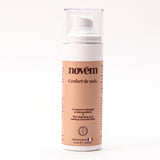
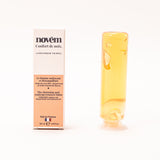
Walnut oil for the face is much more than a trendy ingredient—it is an active ingredient scientifically recognized for its hydrating, anti-aging, and soothing virtues. At Novëm, this exceptional oil is at the heart of the Soothing Face Oil and the Milky Serum enriched with NovoRetin™. Formulated in Grenoble with a PDO walnut oil traceable back to the Ferme Michallet, these skincare products embody slow, natural, and effective cosmetics—designed for you.
Discover the Soothing Face Oil and the entire Novëm range: novemlab.co

