
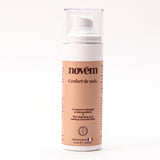
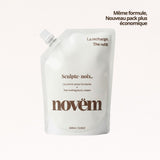
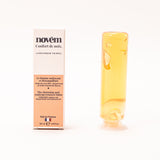

The scenario is familiar: your skin feels tight and lacks suppleness, yet small inflammatory breakouts persist. Faced with this paradox, you seek to hydrate it, but you dread the idea of using a vegetable oil for fear of worsening your acne.
This widely held fear is based on an incomplete understanding of comedogenicity and the role of lipids. As experts in lipid therapy, we explain why our walnut oil, rich in Omega-3, is not only safe but essential for restoring balance to dry, acne-prone skin.
The Paradox of Dry, Blemish-Prone Skin
Why Dryness Promotes Acne
Contrary to popular belief, dryness does not always mean an absence of breakouts. When the skin barrier is weakened (by cold, hard water, or harsh cleansers), the skin defends itself:
-
It becomes inflamed to signal the irritation.
-
It may overproduce sebum (lipids) to compensate for the lack of moisture.
This unbalanced, often thick sebum creates an environment conducive to clogged pores.
Inflammation: The Link Between Dryness and Breakouts
Blemishes are, above all, inflammatory phenomena. If your skin is already hyper-reactive (as is the case with atopic and dry skin), the appearance of a pimple is redder, more painful, and slower to heal. This is where the anti-inflammatory power of Omega-3 becomes crucial.
Comedogenicity: Untangling Fact from Fiction
The Concept and the Comedogenicity Rating
The comedogenicity rating classifies ingredients on a scale of 0 to 5 (0 being non-comedogenic). However, this rating has its limitations:
-
It is often tested on rabbit ears or in vitro, not on human skin in a real-world context.
-
It does not take into account the filtering or the quality of the oil's extraction.
Our Clinical Position: True non-comedogenicity is a matter of final product quality and the composition of fatty acids.
Our Clinical Position: The Importance of Quality and Filtering
For an oil derived from nuts, potential comedogenicity is often linked to protein residues or impurities. Our oils undergo micrometric filtration to guarantee maximum purity. The lipid profile is thus perfectly stable, reducing the risk of pore obstruction to an absolute minimum.
Walnut Oil and Omega-3: Anti-Acne Allies
The Anti-inflammatory Power of Omega-3 (ALA)
The key active ingredient in our oil is Omega-3 (ALA). Its role is not to clog, but to calm the overall inflammation of the skin. Less inflammation means:
-
Less redness around blemishes.
-
Better healing.
-
Fewer epidermal reactions.
Applying a walnut Omega-3 concentrate helps the skin regain a balance that, in the long term, reduces the frequency and severity of breakouts.
The Linoleic Profile and Acne-Prone Skin
Walnut oil also contains a significant amount of Omega-6 (Linoleic Acid). Studies have shown that acne-prone skin often exhibits a deficiency in this fatty acid. A balanced intake helps normalize sebum production.
Our High Tolerance Promise
We understand the skepticism toward oils. That is why our products are subjected to rigorous testing to ensure:
-
Perceived Non-Comedogenicity: User feedback confirming the absence of clogging.
-
High Tolerance: Absence of synthetic fragrances or unnecessary additives.
Choosing expert lipid replenishment with Omega-3s is an investment in the long-term health of your skin.
Conclusion: Walnut Oil is a Solution, Not a Risk
The myth that "oil causes breakouts" does not apply to therapeutic lipids like those found in clinically-grade walnut oil.
If your skin is dry and prone to blemishes, it is time to provide it with Omega-3s to treat inflammation at its source.
➡️ Your skin is craving balance. Discover our facial routine

