

Redness, itching, persistent tightness, dry patches... Have you tried everything without success? These inconveniences share a common root cause: alteration of the skin barrier, your skin's natural shield.
Understanding the structure of this barrier is the first step toward calm, resilient skin. As experts in plant-based lipid therapy, we guide you through the crucial role of this protective film and how specific active ingredients, such as Omega-3s from walnuts, can rebuild it lastingly.
What is the Skin Barrier?
The skin barrier, or hydrolipidic film, is the outermost layer of the epidermis. It functions as a true defensive wall:
-
It prevents Transepidermal Water Loss (TEWL), thereby ensuring skin hydration.
-
It blocks external aggressions: pollution, microbes, allergens, and irritants.
The "Brick and Mortar" Model
To better visualize it, dermatologists use the wall analogy:
-
The Bricks: These are the skin cells (corneocytes).
-
The Mortar: These are the lipids (fatty acids, cholesterol, ceramides) that keep these cells bound together.
As soon as this "lipid mortar" is insufficient or unbalanced, the wall collapses. The skin becomes porous, fragile, and hyper-reactive.
Signs of an Altered Skin Barrier
There are several signs proving that your skin barrier needs repair:
-
Dryness and Tightness: The skin no longer retains water.
-
Redness and Irritation: External aggressions penetrate easily, causing an inflammatory response and itching.
-
Increased Sensitivity: The skin reacts to products it previously tolerated.
-
Eczema or Atopic Dermatitis Flare-ups: These conditions are directly linked to a deficiency in barrier function.
The Root Cause: Lipid Imbalance and Inflammation
The key to repair lies not only in hydration (water) but in Relipidation (corrective fats).
The imbalance is often due to:
-
External aggression: Use of overly harsh soaps, hard water, climatic variations.
-
Internal deficiency: Lack of Essential Fatty Acids (EFAs), particularly Omega-3s.
This is where the clinical approach makes all the sense. While Omega-6s are often overrepresented in our skincare and can be pro-inflammatory in excess, Omega-3s are powerful natural anti-inflammatories.
The Crucial Role of Omega-3s: The Soothing Shield
Our research has focused on a rare plant-based active ingredient: walnut oil.
Thanks to its exceptional concentration and ideal ratio of Omega-3s, it acts as a true biological modulator:
-
It provides the highest quality lipid "mortar".
-
It inhibits the inflammatory response, immediately soothing redness and itching.
To learn more about the scientific data and tests that prove the power of our active ingredients, visit our dedicated page: [Our Expertise](LINK TO YOUR "OUR EXPERTISE" PAGE)
Our 3-Step Repair Protocol
To effectively repair your skin barrier, follow this dermo-protective protocol:
1. Step 1: Cleanse Without Stripping
Use products without sulfates or alcohol, ideally cleansing balms or pH-neutral micellar milks. The goal is to preserve the existing hydrolipidic film. Avoid water that is too hot.
2. Step 2: Relipid with Omega-3s (Active Treatment)
This is the most important step. After cleansing, apply a lipid concentrate.
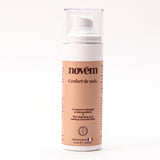
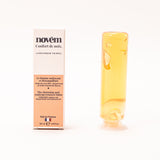
Choose products enriched with walnut Omega-3s. Our Joli Minoix face oil is formulated to directly target areas of deficiency. A few drops are enough to jumpstart the wall repair process.
➡️ See the Joli Minoix face oil: the Omega-3 concentrate for atopic skin
3. Step 3: Seal and Protect
Next, apply a cream or balm that will seal in the active ingredients and protect the skin from external elements (wind, cold, pollution). This cream should ideally continue to provide lipids and ceramides.
Conclusion: Regain Lasting Comfort
Repairing the skin barrier is not a sprint, but a marathon. By prioritizing Essential Fatty Acids like Omega-3s and adopting a respectful skincare protocol, you are no longer masking the problem: you are treating it at the source.
Trust in lipid science and give your skin the bricks and mortar it needs to regain its natural strength and calm.

