

This is an excellent decision. To dominate Google in 2026, you need to transform a simple blog post into an authority guide. By exceeding 1000 words with FAQ sections, expert advice, and local context, you send a strong signal to the algorithm: "This is where the best answer is located."
Here is the article on Mountain Skincare (Alpe d'Huez) in a "beefed-up" (SEO Premium) version.
Mountain Skincare Routine: The Ultimate Guide to Protecting Your Skin at Altitude
Whether you are a regular on the slopes of Alpe d’Huez or an occasional hiker in the Oisans massifs, altitude poses a significant challenge to your epidermis. In the mountains, weather conditions are not just harsh; they are extreme. As soon as you exceed 1500 meters, the UV index increases by 10% for every 1000 meters, the wind intensifies, and the air becomes incredibly dry.
Without an adapted protection strategy, "windburn" and intense dehydration can damage your skin barrier for several weeks. Discover how nucitherapy and our skincare products born in the heart of the Alps protect skiers and lovers of the peaks.
Why is altitude the #1 enemy of your skin?
In high mountains, the skin undergoes what dermatologists call "multidimensional" aggression. Understanding these mechanisms is the first step toward an effective mountain skincare routine.
1. Reflection: The invisible trap
Did you know that snow reflects up to 80% of UV rays? That is almost four times more than sand at the beach. Even on cloudy days, rays penetrate the clouds and bounce off the snow, hitting your face from every angle. This massive oxidative stress causes premature cellular aging and dark spots.
2. Cold and vasoconstriction
Under the effect of cold, blood vessels contract to keep heat near vital organs. The result: your skin is less well-supplied with blood. It receives less oxygen and nutrients, which slows down its regeneration capacity.
3. Wind and transepidermal water loss (TEWL)
The biting wind of high altitude acts like a moisture vacuum. It solidifies sebum (our natural protection) and creates micro-cracks in the skin’s lipid "cement." This is how patches of dryness and burning sensations appear.
The Novëm x Alpe d'Huez Lip Balm: A collaboration born on the peaks
Lips are the most vulnerable area of the face. Lacking sebaceous glands and a thick protective layer, they cannot hydrate themselves. It is to meet this vital need that we developed an exclusive partnership with the Alpe d'Huez resort.
Isère expertise in a stick
Our natural lip balm has been tested in the real-world conditions of the Oisans resort. Its formula is not just a protective wax; it is a deep repair treatment infused with PDO Grenoble walnut oil:
-
Intense nutrition: The essential fatty acids in the walnut repair chapped tissue in just a few applications.
-
Anti-cold barrier: A smooth texture that does not freeze, even at -10°C, creating a long-lasting insulating shield.
-
Local sourcing: By using walnuts from our valleys to protect the skiers of our mountains, we complete the cycle of coherent and sustainable cosmetics.
The "Après-Ski" Kit: 3 steps to repair damage
Once you are back in the chalet, the work is not over. It is during the evening and night that the skin repairs itself.
1. Double cleansing to remove UV filters
Mountain sunscreens are often thick and sticky. A classic cleansing gel is not enough.
-
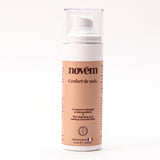
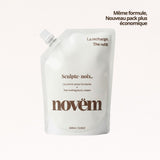
Expert tip: Massage your face with the Walnut Comfort Balm on dry skin. The fats in the balm will dissolve the sun filters without you needing to scrub. Rinse with lukewarm water.
2. Lipid repair with Joli Minoix Oil
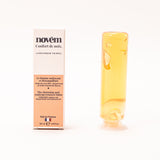
Your skin barrier has lost its lipids. The Joli Minoix Oil, ultra-rich in Vitamin E and Omega 3, helps fill the gaps.
-
Application tip: Apply 3 drops to a face that is still slightly damp. The oil will "seal" the water into your tissues for long-lasting hydration.
3. The nightly cure for lips
Before sleeping, apply a generous layer of the Alpe d'Huez Lip Balm. By working for 8 hours without being disturbed by eating or drinking, it allows for the total healing of small cracks.
FAQ: Your questions about mountain skincare
Why do my lips burn even when it is not sunny? It is the effect of wind and indirect reflection. Even without direct sun, UV rays bounce off the snow. The wind, meanwhile, dehydrates the skin on the surface, creating an inflammation that causes that burning sensation.
Can I use walnut oil before going skiing? Yes, absolutely. Walnut oil is rich in antioxidants that boost the effectiveness of your sunscreen. Apply it under your UV protection to strengthen your cells' resistance to oxidative stress.
How can I avoid "crocodile skin" on my body after skiing? The friction of technical clothing (tights, thermal underwear) and the heat of after-ski showers dry out the body. Apply a rich balm as soon as you get out of the bath and avoid water that is too hot, which dissolves protective sebum.
Is the Novëm lip balm suitable for children? Yes, its natural composition based on walnut oil, free of endocrine disruptors, makes it a perfect ally to protect the cheeks and lips of little ones during their first ski lessons at Alpe d'Huez.
Conclusion: Alpine expertise at the service of your beauty
The mountains teach us humility and resilience. At Novëm, we believe the answer to extreme conditions lies in the ingredients that have learned to survive in that very same terroir. By choosing nucitherapy, you offer your skin authentic protection, born from the encounter between the peaks of the Oisans and the richness of the Dauphiné walnut groves.

